

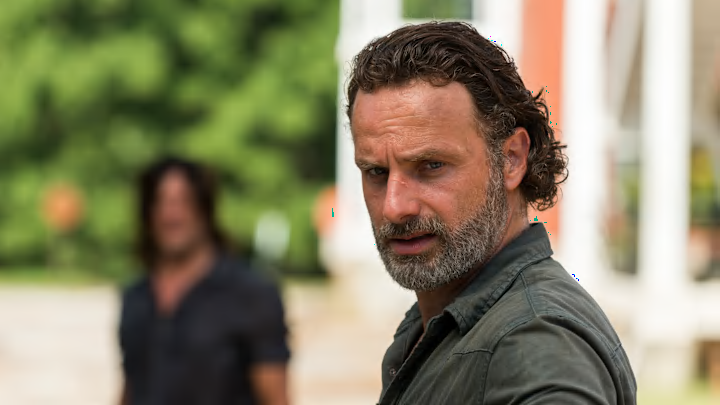
The Walking Dead brought something new to the zombie craze. It wasn’t just about wanton bloodshed and shock value.
At its heart, humanity was the key theme. Rick, Michonne, Shane, Carol — they all struggled. The show focused on a world where there was no place for kindness or compassion. It was kill or be killed. That struggle is what made The Walking Dead truly something special. The zombies were a gruesome backdrop to real human pain. Viewers could relate to the trauma and could see themselves in characters like Carol or Tyreese Williams.
Those were the stories that people fell in love with. Yeah, the action was cool and the effects were fantastic. But the people, the emotional conflicts and tough decisions were what made viewers stay. Viewers cared about and wanted emotional payoffs. There was more of a focus on character development versus character death. Morals mattered. Just avoiding a sweeping zombie hoard was important too. But earlier seasons dealt with human complexity.
A great arc that represents this is season 2 and Lori’s pregnancy. The entire arc is a roller coaster. The reveal that she is pregnant in the apocalypse, that’s heavy. Finding out you're pregnant is crazy and world-altering on a normal day, but during the zombie apocalypse? Madness. Coupled with the fact that in episode 2 we get confirmation that Lori has no clue of the paternity of her child, you get peak drama. The messy, ugly underbelly of humanity. It comes to a head when finally in episode 4 Lori tries to terminate her child. It’s not just about bringing a baby into a zombie-infested world. Her fear isn’t even just the fact that she doesn’t know if the child belongs to her husband or her husband's best friend. We can argue all day about the moral implications of sleeping with your “dead” husband's best friend all day. But I’d need a whole separate article.
The Walking Dead unfortunately became in a way a victim of its own success. In an attempt to keep ratings and continue to peak higher, the show shifted momentum. It became about creating the biggest spectacle. Those ‘what did I just watch’ moments. A great example came in season 7, episode 1, I’m sure you already know where I’m heading.
Glenn’s death was shocking. It was a horrifying display of human cruelty, but it didn’t make me feel anything. I believe this is because deaths in prior seasons were the tragic payoff to character journeys. With Lori’s death, for example, we felt her pain; we knew her struggles. In stark contrast, Glenn’s death felt more like a narrative shock than anything else. Loss became repetitive.
Finally, my position is in no way saying that the less human-centric developments make it a terrible show. That would be a disservice to the exceptional writers and the amazing actors we know and love. Besides, even with those story shifts, The Walking Dead continues to captivate zombie and horror fans alike. And with each new season, it appears that The Walking Dead is shuffling its way back to its roots. We’re getting the gritty emotional undercurrents. We’re reminded why Lori’s death can haunt the narrative, while moments that were purely for shock barely resurface. Humanity is making a comeback.
 Add us as a preferred source on Google