

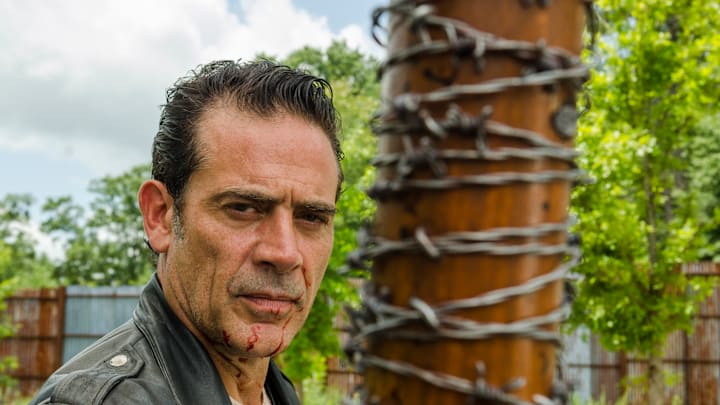
Few moments in The Walking Dead’s long, bloody history caused as much online rage as the season 6 finale, which famously ended with the introduction of Negan and the brutal setup for one of the show’s most gut-wrenching deaths. But while the cliffhanger was meant to leave fans on the edge of their seats, it ended up doing something far more lasting. It permanently damaged audience trust.

The episode, “Last Day on Earth,” ended with a bone-chilling scene. Negan looming over Rick and his group, casually swinging Lucille as he delivered a terrifying monologue that instantly cemented him as one of the show’s most formidable villains. The tension was unbearable, and viewers knew what was coming. Someone was about to die, and there was no escaping it. And then the screen went black.
Instead of delivering the devastating moment fans were bracing themselves for, The Walking Dead pulled back at the last possible second. The identity of Negan’s victim was withheld, stretching the reveal across a months-long hiatus. We're talking six whole months! And that’s when the frustration truly set in. Six months is a long time to sit with that kind of unresolved dread, especially when the show had already pushed the tension to its absolute limit.
Many fans felt manipulated, feeling as if the show had deliberately withheld a payoff just to boost hype and ratings. That made the storytelling feel secondary to strategy, which eroded trust in the writers’ intentions. Social media erupted with backlash, and a large portion of the audience made it clear that this wasn’t the kind of suspense they signed up for. Critics mirrored these frustrations as well.
When the reveal finally came in the season 7 premiere, the damage was already done. Even though the deaths of Abraham and Glenn were horrifying and impactful, they couldn’t fully recapture the emotional weight they would have carried if the moment had been allowed to land naturally. For some viewers, the suspense had curdled into resentment, making it harder to reconnect with the story moving forward.
It really marked a turning point for many fans. Following the Negan cliffhanger, they began watching with caution rather than trust. Every tease, every fake-out, every drawn-out mystery that followed was viewed through a more skeptical lens. There were also some fans who decided to completely check out entirely. After investing years in the lives, struggles, and losses of these characters, the sense of betrayal was too much for some to ignore.
In fact, the fallout was visible not just online but in the ratings. While the season 7 premiere drew a massive 17 million viewers, fueled by anticipation for the Negan reveal, that number dropped sharply in the episodes that followed, dipping to around 10 million by mid-season. The initial spike reflected curiosity and hype, but the steep decline revealed that many longtime fans were frustrated or disillusioned by how the season 6 cliffhanger had been handled.
Overall, the Negan cliffhanger ultimately became a cautionary tale in television storytelling. It proved that suspense can excite, but when stretched too far or handled in a way that feels manipulative, it risks alienating the very audience it seeks to engage. For The Walking Dead, the cost was significant. And ultimately, it served as a stark reminder that no amount of shock or suspense is worth sacrificing the trust of the audience that keeps a show alive.
The Walking Dead is streaming now on Netflix.
 Add us as a preferred source on Google