

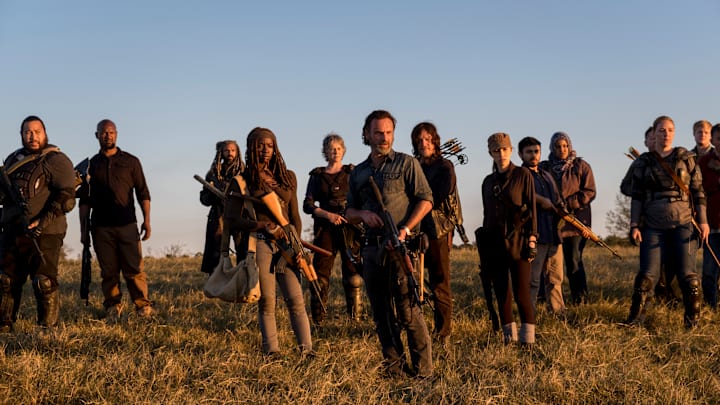
There’s no denying the cultural impact of The Walking Dead. When it first stumbled onto screens in 2010, audiences were instantly drawn in by the gritty realism of a world overrun by the undead. But it wasn't just about the walkers. It was about the living, and the lengths people would go to protect themselves and those they loved.
The show held up a mirror to humanity, exploring morality, loyalty, and the raw instincts that surface when civilization collapses. Viewers became invested not just in who would survive, but in how far they were willing to go to endure. Yet as the series went on, The Walking Dead faced a daunting challenge.

How do you keep shocking viewers in a world where the baseline is already so extreme? The very ambition that made the show groundbreaking also became its stumbling block. In trying to top itself season after season, it sometimes veered into over-the-top plots, inconsistent character arcs, or shock value moments that didn’t always land.
Scenes that were meant to escalate tension occasionally felt hollow, as if the series were forcing the stakes higher without the emotional groundwork to support them. Even beloved characters were sometimes caught in narrative whirlwinds, making decisions that felt unearned or out of character. But one of the most visible consequences of this “ever-upward escalation” was the show’s relentless pursuit of massive, shocking deaths. In the early seasons, death carried weight precisely because it was rare and meaningful.
The impact of each death was felt in the relationships, the power dynamics, and the moral choices that followed. But as the seasons progressed, The Walking Dead began to chase bigger, bloodier, and more headline-grabbing deaths. The rare and devastating moments of early seasons gave way to an expectation.
If someone had survived the previous week, surely the following week would bring an even more brutal loss. Major characters were frequently killed off in ways that prioritized spectacle over story. While the problem wasn’t necessarily the deaths themselves, it was the way the series increasingly treated them as a metric to one-up itself. Instead of allowing deaths to emerge organically from the story, they became a tool for shock value.
This pursuit of ever-larger, more shocking deaths also came at the expense of character development. Fan-favorite figures were removed before their arcs could be resolved, leaving emotional gaps that viewers struggled to reconcile. Instead of mourning the loss of a fully realized person, audiences were often left processing a dramatic, cinematic moment that lacked the narrative weight to make it resonate.
Ultimately, The Walking Dead's struggle to continuously outdo itself demonstrates a lesson about long-running storytelling. Ambition is vital, but it must be tempered with narrative discipline. Shocking deaths can enhance drama, but only when they arise naturally from the story and the emotional journey of the characters. The Walking Dead was at its most compelling when every loss felt like it mattered, rather than a relentless competition of who could die next in the most spectacular fashion.
All 11 seasons of The Walking Dead are streaming on Netflix.
 Add us as a preferred source on Google