

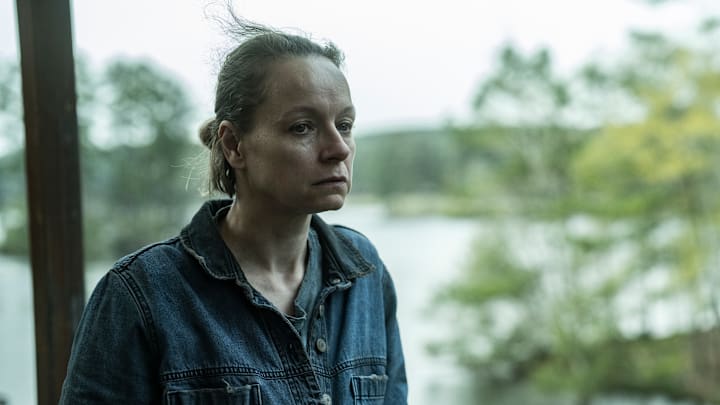
When Tales of the Walking Dead was announced, the fanbase buzzed with cautious excitement. The idea of an anthology set in the familiar post-apocalyptic world promised something new, something experimental. It promised different styles, different tones, and snapshots of lives we hadn’t yet seen. Honestly, it sounded like a chance to expand the universe without dragging the main narrative past its natural conclusion.
But instead, what arrived was a show that often felt oddly empty. It wasn’t bad in the traditional sense. There were episodes with solid acting, interesting concepts, and even a few creative flourishes. But it lacked the one thing that made The Walking Dead resonate. That's attachment. The original series, for all its ups and downs, thrived because it asked viewers to commit to its characters. It made us care about who survived, who fell, and why. Tales of the Walking Dead, by contrast, asked us to care about strangers in forty-minute increments, with no guarantee we’d see them again.

This is the core of its failure. Tales of the Walking Dead tried to tell stories in the same world, but without the emotional glue that had held the audience for eleven seasons. We watched characters we didn’t know, invested in arcs that would never echo into anything larger, and then watched the episode end. For a casual viewer, that might be enough. But for a fan who had spent years living and breathing this world, it felt disposable. The anthology format was perfect. But the decision to focus largely on new faces rather than the people we already cared about robbed it of resonance.
Where Tales of the Walking Dead truly could have shined, and where it failed to, is in the untold stories of characters we’ve followed for years. The Walking Dead universe is full of gaps. Years passed between seasons of the original series, and people reappeared hardened, changed, and shaped by events we never see.
Tales of the Walking Dead had the perfect format to explore those stories. It could have even been an anthology of origin stories, of pivotal moments that shaped characters like Carol, Daryl, Michonne, Negan, Maggie, etc. Instead of asking viewers to care about strangers, it could have given us deeper insight into the people we already loved. It did it for Alpha, also known as Dee.
But imagine an episode showing Carol in the immediate aftermath of the apocalypse, or one about Daryl navigating the world before he meets Glenn and the others. What about Michonne too? Who wouldn't want to see a backstory on her before she ran into Andrea in the woods with her chained walkers? These are stories fans would have leaned into.
The tragedy of Tales of the Walking Dead is that it approached the wrong question. It asked, “What other people exist in this world?” when it should have asked, “What crucial moments did the people we love experience off-screen?” The former is experimental and occasionally entertaining. The latter would have been essential. Origin stories would have provided context for everything that came before, transforming Tales of the Walking Dead from an optional side project into a core part of the franchise.
In the end, Tales of the Walking Dead serves as a cautionary tale. It’s a reminder that even in a world bursting with story potential, emotional investment is everything. Ambition and experimentation can be exciting, but without giving viewers someone to care about, even the most inventive episodes feel hollow. Tales of the Walking Dead could have been a legendary Walking Dead spinoff, but by focusing mainly on new faces rather than the characters we already loved, it became a series many fans could watch and then forget.
You can stream Tales of the Walking Dead on AMC+ with a subscription.
 Add us as a preferred source on Google