

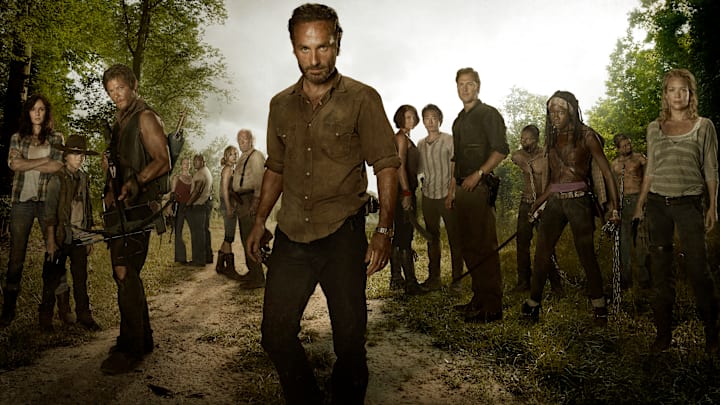
The legacy of The Walking Dead is packed with memorable characters, shocking deaths, and emotional arcs that still spark debate years later. But nostalgia has a funny way of polishing rough edges.
When fans look back, certain characters often get remembered more fondly than they probably deserve. Whether it’s due to inconsistent writing, underwhelming development, or simply not living up to their hype, some survivors weren’t quite as great as memory suggests.
Here’s a closer look at several Walking Dead characters who, upon rewatch or reflection, weren’t as strong as fans tend to remember.

Shane Walsh
Shane Walsh is often looked back on as a tragic figure who just adjusted to the apocalypse faster than everyone else, but that view is probably a bit too kind to him. Yes, he understood early on that survival in a world like The Walking Dead sometimes meant making harsh, even brutal choices. But what started as “tough realism” quickly spiraled into something a lot messier.
His obsession with Lori, the growing tension with Rick, and his increasingly erratic behavior show a man who wasn’t really evolving into a strong leader. He was coming apart. A good example is when he lured Randall to his death. That moment wasn’t just about survival strategy. It showed Shane was willing to cross serious moral lines to get his way.
Over time, it stopped being about protecting the group and started feeling like it was about control and about proving he was right and everyone else was wrong. That said, his story was still gripping. Shane brought a lot of intensity to the early seasons. But the idea that he was “right all along” tends to ignore how unpredictable, unstable, and dangerous he became when things didn’t go his way.

Tyreese Williams
Tyreese Williams is often remembered as the “gentle giant” of The Walking Dead. You know, the guy who stayed kind and compassionate even when everything around him got brutal. And that’s definitely part of who he was. But it also makes him feel a bit more important in the story than he actually ended up being.
Tyreese really struggled with violence. He didn’t want to hurt people unless he absolutely had to, and in a world like that, it sometimes put him in tough situations. There were moments where his hesitation or refusal to act quickly ended up making things more dangerous for the group.
The thing is, while other characters went through similar moral struggles and came out changed by them, Tyreese didn’t really shift all that much over time. He dealt with guilt, grief, and anger, but those emotions didn’t often lead to big decisions or noticeable growth. Instead, he mostly reacted to whatever was happening around him rather than taking charge of situations himself.
That doesn’t mean he wasn’t a meaningful character. His emotional side was one of his strongest traits. It’s just that the show didn’t always give him enough space or opportunity to turn that depth into real impact on the story.

Beth Greene
Beth Greene’s transformation from a sheltered teenager to a more self-assured survivor is one of the quieter arcs in the series, and it’s often remembered with a sense of fondness. However, that nostalgia can sometimes inflate her overall significance. For much of her time on the show, Beth existed on the periphery of major storylines. She contributed emotionally but rarely drove the plot.
The hospital arc attempted to bring her into focus. She was placed in a tense and morally complex situation, but the pacing and structure of that storyline left much to be desired. By the time Beth took a stand, the resolution felt abrupt, cutting short what could have been a more substantial evolution. While her character represented hope and innocence in a bleak world, her limited screen time and underdeveloped arcs make her impact smaller than fans often recall.

Glenn Rhee
This one might be controversial because Glenn Rhee is undeniably one of the most beloved characters in the entire series. However, when you look at his later seasons more critically, Glenn became far less dynamic than fans tend to remember.
After his early growth—from a scrappy scavenger to a dependable survivor—his arc largely plateaus. Much of his storyline became centered around protecting Maggie, which, while emotionally compelling, limited his individual development. Additionally, the show repeatedly placed him in fake-out death scenarios, which diminished the impact of his actual fate. By the time of his final episodes, Glenn felt more like a symbol than an evolving character.
While Glenn's legacy is incredibly strong, it’s also heavily shaped by nostalgia and the emotional weight of his death rather than the consistency of his later storytelling.

Hershel Greene
Hershel Greene is often remembered as the moral compass of the early seasons, offering wisdom and stability during some of the group’s darkest moments. While this reputation is well-earned to an extent, it can also overshadow the limitations of his character. Hershel’s role in the story was largely static. He served as a voice of reason and a symbol of hope, but he didn't undergo a significant transformation himself.
His initial denial about the walkers and eventual acceptance of reality was an important arc, yet it resolved relatively early, leaving him with less room to evolve afterward. Much of his continued presence relied on dispensing advice rather than engaging in dynamic storytelling. As a result, his legacy is more about what he represents than how much he actually changes over time.
The Walking Dead is streaming on Netflix.
 Add us as a preferred source on Google