

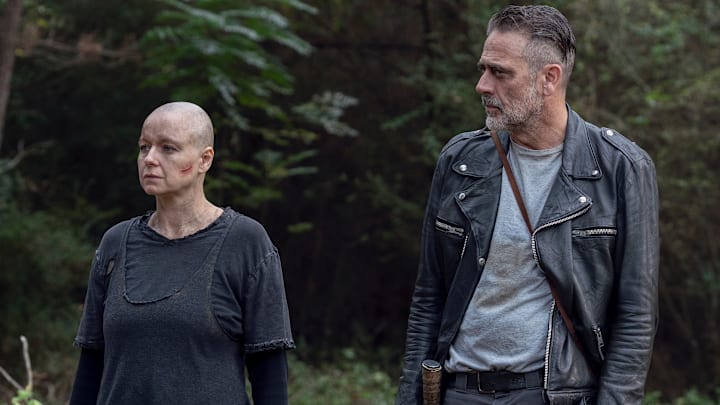
For fans of The Walking Dead, April 3, 2016, is a date that lives in infamy. It was the day AMC aired the season 6 finale that introduced a character who would come to define fear, power, and unpredictability in the post-apocalyptic world. Viewers were introduced to none other than the iconic Walking Dead villain, Negan.
While the show had already seen its fair share of threats, the arrival of Negan marked a turning point in the series. With his charisma, cruelty, and signature weapon, Negan became the embodiment of the danger that could come from the living.
Since today is April 3, 2026, it’s the perfect moment to look back at his shocking debut, which forever changed the trajectory of the show and the lives of Rick Grimes and his group.
April 3 marks 10 years since The Walking Dead introduced Negan

Negan, portrayed by Jeffrey Dean Morgan, was teased carefully throughout season 6. For months, the show’s creators built an aura of dread around him. By the season finale, titled "Last Day on Earth," fans were on the edge of their seats, anticipating the moment Negan would finally appear. Then, it happened.
From the second he stepped out of the RV and introduced himself in the season 6 finale, it was clear that this wasn’t just another villain. This was someone who operated on an entirely different level. He took control of the screen instantly.
The lineup scene, now one of the most infamous sequences in the show’s history, showcased exactly what made him so terrifying. Rick and his group, who had spent seasons surviving impossible odds and defeating enemies, were suddenly powerless. Negan dictated the terms, controlled the situation, and made it painfully clear that the rules had changed. For the first time in quite some time, the group wasn’t just in danger. They were completely at someone else’s mercy.
What made this moment so effective wasn’t just the violence implied, but the psychological tension behind it. Negan didn’t rush. He talked, joked, and even toyed with his victims. He dragged out the moment in a way that made it almost unbearable to watch.

The now-iconic “eeny, meeny, miny, moe” sequence was unsettling, and it became symbolic of the fear he instilled in both the characters and the audience. By the time the episode cut to black, viewers were left stunned. It wasn't because they didn’t see Negan clearly, but because they didn’t know who would pay the ultimate price.
That distinction is important. The power of Negan’s debut wasn’t in hiding him. It was in letting him fully command the scene while withholding the final outcome. Fans saw exactly who he was: ruthless, theatrical, and completely in control. What they didn’t know was who wouldn’t survive the encounter. That uncertainty turned the season 6 finale into one of the most talked-about cliffhangers in television history.
The months between seasons 6 and 7 were filled with speculation, debate, and nonstop conversation. Social media lit up with theories as fans tried to piece together clues and predict the victim. It was truly a shared cultural moment. Everyone who watched The Walking Dead at the time remembers where they were when they saw that finale and how they felt when it ended.
Negan’s arrival also marked a deeper shift in the show’s storytelling. Before this, the series had largely balanced its threats between walkers and hostile survivor groups. But Negan introduced something different. He introduced a structured, oppressive system of power.

He wasn’t just a man with a weapon. He was the leader of the Saviors, a group that operated under strict rules enforced through fear and brutality. This added a new layer to the narrative, forcing Rick and his group to navigate not just survival, but submission, resistance, and the cost of both.
Additionally, Negan's arrival challenged the identity of the show’s core characters. Rick, who had long been a decisive and dominant leader, was suddenly forced into a position of vulnerability. The dynamic between him and Negan became one of the most compelling aspects of the series moving forward, as it explored what happens when strength alone isn’t enough.
That power struggle didn’t just define a single episode or season either. It became a central thread that shaped the emotional and narrative direction of the show for years to come.
Looking back a decade later, it’s clear that "Last Day on Earth" wasn’t just another episode of television. It was a defining moment that reshaped The Walking Dead and elevated it to new heights of storytelling. The introduction of Negan proved that even deep into its run, the zombie show could still shock audiences, spark conversation, and take bold creative risks.
The complete Walking Dead series is streaming on Netflix right now.
 Add us as a preferred source on Google