

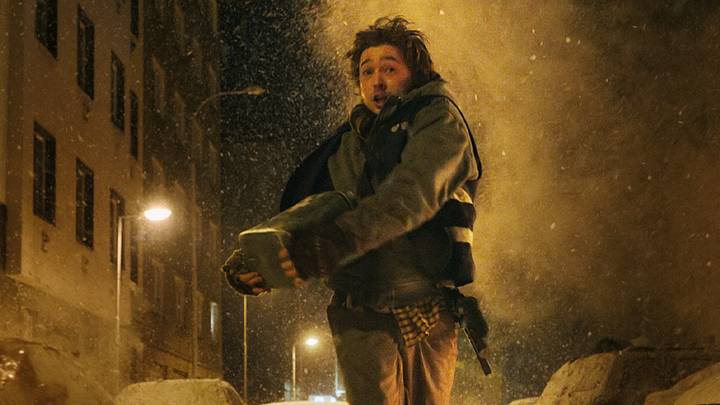
What're ya buyin'? Tickets for Resident Evil? The iconic franchise developed by Capcom has been a staple of the horror genre in the video game world, haunting players across nine main titles and multiple spin-offs. Unfortunately, this level of success has never been translated to the big screen, and it hasn't been for lack of trying.
There were six Resident Evil movies starring Milla Jovovich, although none were really considered a critical success. A reboot came our way in 2021 courtesy of Resident Evil: Welcome to Raccoon City, but it couldn't quite capture lightning in a bottle either. As such, the weight of the franchise fell on Zach Cregger's Resident Evil (2026), and it delivered in horrifyingly good fashion.
Resident Evil (2026) quickly cemented itself as the highest-rated video game film ever made across live-action and animation. Furthermore, early projections estimate it will have an astonishing opening of somewhere between $120 and $150 million at the worldwide box office, which would be a new record for the franchise. So, did Sony plan ahead and add a post-credits sequence meant to set up a sequel? Unfortunately, no, but there's still a reason to wait until the credits stop rolling.
Resident Evil's end credits feature thrilling music from Hays Holladay and Ryan Holladay
After Resident Evil (2026) cuts to black, audiences will be treated to a very menacing-looking credit sequence that features red text against a black background. Right out of the gate, Animal Farm by The Kinks will start to play, and its lyrics can be interpreted as a reference to the events of the movie: "This world is big and wild and half insane. Take me where real animals are playing. Just a dirty old shack, where the hound dogs bark, that we called our home."

After the song comes to an end, a very menacing track titled "Main Titles Extended" will play, composed by Hays Holladay and Ryan Holladay in collaboration with Aaron Esposito. This theme is then followed by another track titled "Skybridge Reprise," also composed by the Holladay brothers and Shannon Lay. The film's fantastic score is enough to give audiences goosebumps, especially after surviving such a tense, fun, and terrifying experience.
There may be a good reason why Resident Evil (2026) didn't feature a post-credits scene. While there's certainly room to expand on the film's story based on its ending and the game's overall mythology, it is likely Sony wanted to wait for the reception of the first movie first. As mentioned before, no Resident Evil movie before was critically acclaimed, while Resident Evil: Welcome to Raccoon City also stumbled at the box office. As such, it was better to have a "wait-and-see" approach for this potential new franchise.
On the bright side, the door for a follow-up isn't completely closed either. Resident Evil (2026) tells a completely original story that isn't necessarily "canon" to the events of Capcom's franchise. After all, the film takes place in a modern setting filled with smartphones, while Resident Evil 2 (which is when the outbreak occurs) takes place in 1998. This means Zach Cregger could very well take a few creative liberties when creating a follow-up, and he already has an idea of where the story might go next.
During an interview with The Playlist, director Zach Cregger revealed that he has already started to think about ways to expand the story of Resident Evil (2026): "I can't help thinking about other places this story could go. I've got ideas, but this movie hasn't even come out yet. Let's see what happens."
Of course, the deciding factor is Resident Evil's performance at the box office. If the film manages to find a lot of commercial success in addition to the overwhelming amount of praise it has received, then chances are Sony will think about greenlighting a sequel. But regardless of whether this is the start of a franchise or it will forever be a stand-alone adventure, it's nice that the saga's big-screen curse was finally broken.
Resident Evil (2026) is now playing in theaters.
 Add us as a preferred source on Google