

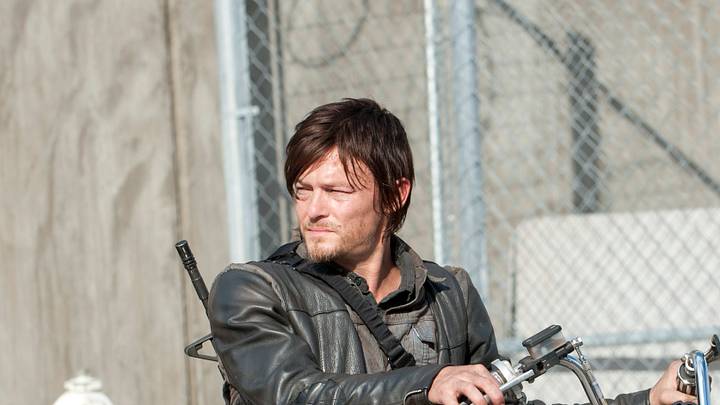
Daryl Dixon has long been one of The Walking Dead’s most popular characters. From his early days with a crossbow in hand to his gradual evolution into a reluctant leader, he’s become a clear fan favorite and something of a cultural icon. He’s the kind of character who doesn’t need big speeches or dramatic monologues. Truly, his presence alone usually does the work.
But being popular doesn’t make a character immune to criticism. If anything, it tends to do the opposite. The more attention a character gets, the more closely every decision, storyline, and arc is examined. And for Daryl, that level of scrutiny has led some fans to wonder whether the hype around him always lines up with what’s actually happened on screen.
That’s where the “overrated” conversation comes in. It’s not really about dismissing his importance, but more about exploring the gap between how he’s perceived and how he’s used in the story. Because while Daryl Dixon is still undeniably iconic, there are moments where his reputation arguably outpaces his actual narrative weight.

1. Daryl's character development eventually plateaus
One of Daryl’s biggest strengths early on was just how much he changed. He started as a rough, volatile outsider. You know, someone who didn’t quite fit into the group and carried a lot of emotional baggage. Over time, though, he softened. He built real connections, showed more vulnerability, and gradually became one of the group’s most dependable members. That evolution really worked.
The issue is that, eventually, that development started to level off. In the later seasons, Daryl didn't change all that much. He stayed consistent, which wasn't necessarily a bad thing, but it did mean he didn’t evolve as noticeably as some of the other characters around him. He still had that quiet intensity, the guarded emotions, and the lone-wolf streak he’s always had.
But while that consistency helped define who he is, it also made his story feel a bit static at times. When a character is constantly praised as one of the most compelling figures in the series, audiences expect continued growth or transformation. Without that, the level of admiration can start to feel slightly out of sync with what’s being shown.
2. Plot armor reduces the sense of real stakes
Daryl went through a ridiculous number of life-or-death situations in The Walking Dead, and more often than not, he walked away from all of them. In a way, that’s part of what made him such a standout character. He proved just how capable and resilient he is.
But at a certain point, it also started to feel like he was just not in real danger anymore. That’s where the idea of “plot armor” comes in. The zombie show built its reputation on being unpredictable. Basically, where anyone could die at any time, and that uncertainty kept the tension high.
But with Daryl, though, that tension didn't always hit the same way. Even in the most extreme situations, there was often a quiet expectation that he would find a way out of it. And when that started to happen consistently, it took a bit of the edge off those moments where he’s supposed to feel truly at risk.
Over time, however, that predictability weakened the emotional impact of his scenes. When viewers don’t genuinely fear for a character’s survival, the stakes feel lower. Even if the situation itself is objectively dangerous.
So while Daryl’s survival contributed to his legendary status, it also made his storylines feel less suspenseful compared to others. And when the show continued to frame him as one of its most gripping figures, that lack of tension created a subtle disconnect.
3. Daryl gets the spotlight, but not always the strongest material
There’s no doubt Daryl ended up becoming one of the show’s main pillars, especially in the later seasons. As other big characters left, the story leaned more and more on him to carry a lot of the emotional weight and push things forward.
But being at the center of the story didn’t always mean the storytelling around him was at its strongest. At times, Daryl’s arcs felt a bit stretched or underdeveloped compared to how much screen time they were given. He was often dropped right into major conflicts, but those moments didn’t always dig deeper into who he was or move his character forward in a meaningful way. Instead, they tended to rely on what we already knew about him without really adding anything new.
So while he was constantly present and clearly important, his actual progression sometimes stalled. And for viewers, that can feel a bit off. Why? Well, because when a character is getting that much focus, you naturally expect their storylines to be some of the most engaging. When they don’t quite hit that level, it can start to feel like the character’s importance is being carried more by reputation than by what’s actually happening on screen.
So, is Daryl Dixon overrated?
In some ways, yes. Not because he lacks impact. Daryl can feel overrated when his level of praise doesn’t fully align with his character development, the stakes he faces, or the strength of his storylines. Those gaps are real, and they’re worth acknowledging.
But at the same time, that “overrated” label doesn’t diminish what he represents. If anything, it highlights the weight of his legacy.
You can catch Norman Reedus as Daryl Dixon in The Walking Dead and The Walking Dead: Daryl Dixon, which are both streaming on Netflix.
 Add us as a preferred source on Google