

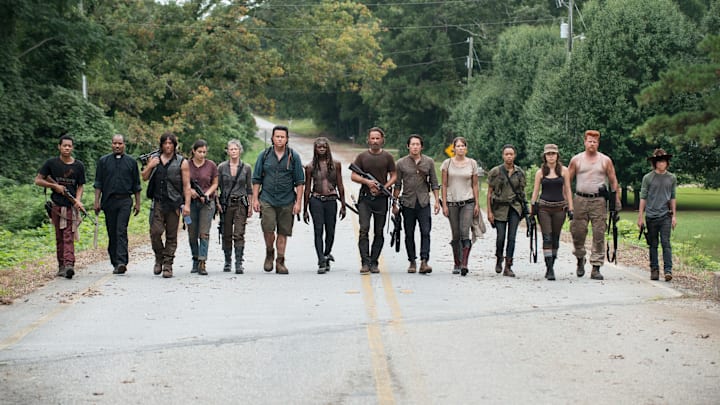
For over a decade, The Walking Dead defined what a post-apocalyptic television series can be. Gritty, character-driven, and often brutally unpredictable, it built a legacy that reshaped the zombie genre on TV. So when The Last of Us arrived with massive hype, prestige storytelling, and critical acclaim, comparisons were inevitable. But while HBO’s adaptation is undeniably powerful, there’s still a compelling argument to be made: The Walking Dead does the apocalypse better.
At its core, The Walking Dead thrives on the idea that survival isn’t just about avoiding the undead. It’s about enduring the slow psychological erosion that comes with a world that never stops taking. From the very beginning with Rick Grimes waking up alone in a ruined hospital, the show establishes an unforgiving tone. Safety is temporary. Hope is fragile. And no one, no matter how important they seem, is truly safe.

That unpredictability became one of the show’s greatest strengths. Characters like Glenn Rhee and Carl Grimes weren’t just casualties. They were emotional gut punches that reinforced the idea that the apocalypse doesn’t follow narrative rules. This constant sense of danger created a tension that few shows have been able to replicate.
By contrast, The Last of Us leans heavily into a more structured, almost intimate storytelling style. The journey of Joel Miller and Ellie Williams is deeply emotional and beautifully crafted, but it operates within a more contained narrative. It’s less about surviving an ever-changing world and more about a specific relationship unfolding within it. That focus is a strength, but it also limits the scale of its apocalypse.
Scale is where The Walking Dead truly shines. Over multiple seasons, the series explores different communities, ideologies, and survival strategies. From the brutal rule of Negan and the Saviors to the fragile civilization attempts in Alexandria, the show constantly evolves. It asks big questions: What does rebuilding society look like? Can morality survive when the world ends? And how far is too far when survival is on the line?
The Last of Us touches on similar themes, but often in smaller, more contained arcs. Its world feels intentionally curated. Devastating, yes, but less chaotic. In The Walking Dead, chaos is the point. Entire communities can fall overnight. Power shifts violently. And the line between hero and villain blurs in ways that feel raw and unfiltered.
Another key difference lies in longevity and immersion. Spending years with characters like Rick, Daryl, and Carol allows viewers to witness profound transformations. These aren’t just survivors. They’re people shaped, broken, and rebuilt by the world around them. The long-form storytelling gives The Walking Dead the space to explore the apocalypse as a lived-in reality, not just a backdrop.

Meanwhile, The Last of Us feels more like a carefully constructed narrative experience. It’s cinematic, deliberate, and emotionally resonant, but it doesn’t yet offer the same sprawling, unpredictable ecosystem that made The Walking Dead feel so immersive.
None of this is to say that one show is objectively better than the other. The Last of Us excels in storytelling precision, performances, and emotional depth. But when it comes to capturing the sheer unpredictability, scale, and long-term psychological toll of the apocalypse, The Walking Dead still holds the crown.
In the end, the difference comes down to perspective. The Last of Us tells a powerful story within the apocalypse. The Walking Dead makes the apocalypse itself the story, and that’s why it still does it better.
 Add us as a preferred source on Google