

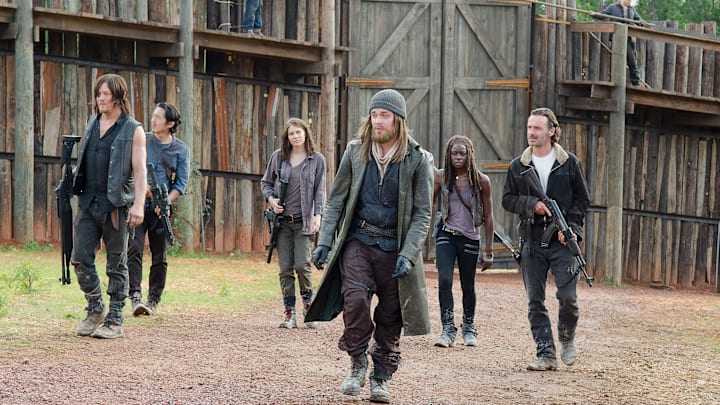
For over a decade, The Walking Dead defined modern zombie storytelling on television. Its slow-burn survival drama, morally complex characters, and grounded approach to the apocalypse helped make it a landmark series. But when it comes to sheer scale and pulse-pounding speed, World War Z delivered an experience that the long-running zombie series never quite attempted.
This isn’t about which story is “better” overall. It’s about scope, urgency, and the feeling of total global collapse. And in those areas, World War Z had the undeniable edge. One of the biggest differences between the two properties is simple: geography.
The Walking Dead kept its focus largely regional. From Atlanta to rural Georgia to Virginia and beyond, the show centered on tight-knit survivor communities navigating a broken America. The apocalypse was ever-present, but it was experienced through a narrow lens with one group at a time. World War Z, on the other hand, went global almost immediately.

The film follows Gerry Lane (Brad Pitt) as he travels from Philadelphia to South Korea, Israel, and Wales in a desperate attempt to understand and slow the outbreak. Entire cities fall in minutes, and governments scramble. The scale feels planetary. Civilization also fractures and collapses in waves.
The Jerusalem sequence alone demonstrated what The Walking Dead rarely visualized. We see thousands upon thousands of zombies moving as a near-unstoppable force, climbing over each other in horrifying unison. It’s a worldwide catastrophe unfolding in real time. Then, there's the speed.
The Walking Dead thrived on tension built over hours and episodes, often lingering on personal drama or the moral dilemmas of its characters. Zombies could appear suddenly, but the threat was measured. Characters and viewers had time to catch their breath between scares.
World War Z, in contrast, moved at a breakneck pace from scene to scene. The infected sprint, the outbreaks spread in moments, and every scene felt urgent. You are constantly on edge, never really allowed a moment of complacency, as the apocalypse accelerates around the globe.
This combination of global scale and unrelenting speed is what sets World War Z apart. While The Walking Dead invited viewers to invest in the slow-building drama of individual communities, World War Z immersed you in a world where the apocalypse is happening everywhere, all at once.
Ultimately, it isn’t about declaring a “winner” in storytelling quality. The Walking Dead excelled at long-form narrative, character depth, and the exploration of human nature in crisis. In addition, World War Z excelled at cinematic urgency, adrenaline-fueled spectacle, and conveying the terrifying scope of global disaster. What we're trying to say is that both have their strengths, but they offer fundamentally different experiences.
If you want intimacy and moral drama, The Walking Dead delivers. But if what you're seeking is a zombie film with scope, speed, and sheer cinematic intensity, World War Z is the ultimate thrill. It's really all about what you're in the mood for.
The entire The Walking Dead series is available to stream on Netflix, while World War Z is streaming on Paramount+.
 Add us as a preferred source on Google