

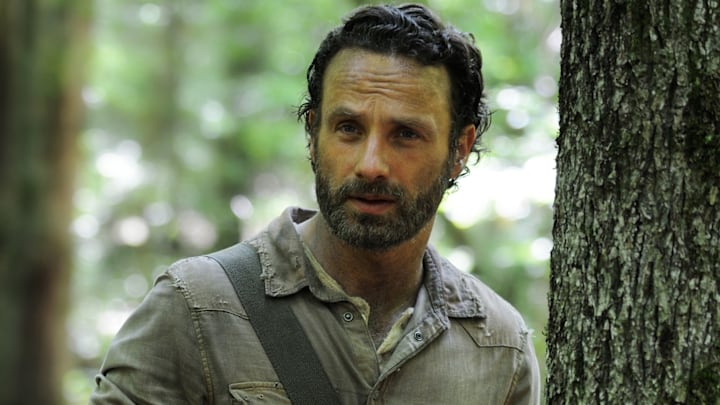
When AMC announced Andrew Lincoln as Rick Grimes on April 6, 2010, few could have predicted the ripple effect that decision would have on television, pop culture, and Lincoln’s own career. At the time, The Walking Dead was a promising adaptation of a beloved comic book, but it was still an unproven concept.
Zombies on TV had rarely worked for long, and networks were skeptical about whether a horror-driven, character-focused story could win over mainstream audiences. But Lincoln’s casting would prove to be the single most pivotal decision in the show’s history, anchoring the series and setting a standard for character-driven genre storytelling.
Today, April 6, 2026, marks 16 years since that game-changing announcement, and we're about to take a trip down memory lane to revisit how this one decision transformed the show.
Andrew Lincoln’s casting in The Walking Dead turns 16 today

When AMC began developing The Walking Dead, zombies on television were largely considered a niche interest. While horror films featuring the undead had a passionate following, networks were cautious about whether audiences would commit to a series centered around zombies.
Previous attempts at horror-driven television had struggled to maintain momentum, and the stakes for AMC were high. They needed a lead who could not only survive in a post-apocalyptic world but also anchor the series with human emotion and depth. That's where Lincoln came in.
At the time, Lincoln was best known for his work in British television, including the critically acclaimed series Teachers. Though not a household name in the United States, his ability to convey vulnerability, determination, and moral complexity made him the perfect choice for Rick. His casting was a gamble, albeit one that would ultimately pay off in ways no one could have predicted.
Why Andrew Lincoln made the difference
Rick is more than just a survivor of a zombie apocalypse. He is the moral compass, the reluctant leader, and often the emotional center of the series. The role demanded someone who could convincingly portray a man facing unimaginable horrors while keeping the audience invested in his journey. Lincoln brought nuance to the character, balancing the toughness required to lead a group of survivors with the raw, human emotions of fear, grief, and hope.
Fans quickly responded to Lincoln’s portrayal. His performance created a sense of connection and empathy that elevated the series above typical horror fare. The audience didn’t just watch The Walking Dead for the zombies. They watched for the people, and Rick was the heart of that experience.
That's why Lincoln's eventual departure in the ninth season was such a monumental moment for the series. His exit left a palpable void. Not just in the story, but in the hearts of viewers who had followed Rick’s journey from small-town sheriff to the steadfast leader of a post-apocalyptic community. The show had built its emotional core around him, and without Rick, everything felt different.
However, fans would eventually see his brief return in the eleventh and final season before he'd make his big comeback in The Walking Dead: The Ones Who Live. Now, fans are just hoping to see him return at least one more time in a potential Walking Dead crossover spinoff or something of that sort. Fingers crossed!
Reflecting on a pivotal moment
Anniversaries like this serve as a reminder of the power of casting in television. The choice of the right actor for a central role can change the trajectory of an entire show. For AMC, casting Lincoln was that decision. 16 years later, it’s clear that Lincoln wasn’t not only the perfect Rick Grimes. He was a catalyst for The Walking Dead’s enduring success.
As fans revisit the series or explore its spinoffs, the impact of that April day in 2010 remains undeniable. Lincoln’s casting helped transform a risky zombie series into a cultural phenomenon, leaving a legacy that will continue to be celebrated for years to come.
The complete Walking Dead series is available to stream on Netflix right now.
 Add us as a preferred source on Google